
Feng Shui and Glass doors: harmony and energy flow in the room
Glass doors, especially clear glass doors, allow light and energy to flow freely from one room to another. They also expand the horizon inside the house, making everything rooms look bigger, wider, warmer and brighter. Glass doors thus contribute to a healthy living environment and upscale quality of life.
This is exactly what makes Glass doors a perfect element in buildings decorated according to the principles of Feng Shui.
Feng Shui: The "Qi" must flow
Feng Shui is a very old harmony teaching from China and is attributed to Taoism. It is based on the idea that the environment has a direct influence on people's lives. It was used in ancient China in the design of tombs, gardens and houses.
Classical Chinese Feng Shui starts with the building site: A house should be placed so that the natural environment protects it while allowing "Qi": energy, air, breath, vapors and emotions to flow freely.
In Neo-Feng Shui, the Western version, the building site is ignored for practical reasons and Feng Shui focuses on the interior design and the orientation of walls, windows and doors. The desired result is harmony, balance and a positive flow of energy in the environment to improve people's well-being, health and quality of life.
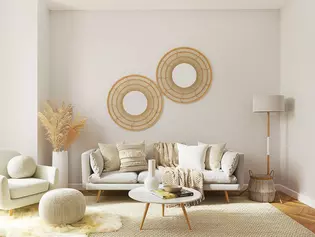
How does Feng Shui?
There are different schools of Feng Shui. However, some rules and advice apply pretty much always:
- The entrance area should be inviting, tidy, without obstacles, and have clear, bright lighting. In general, you should always pay attention to order and cleanliness throughout the home. Also avoid sharp corners or sharp objects near the entrance.
- The arrangement of furniture should be such as to allow a comfortable pattern of movement, and None sharp corners should point to other furniture or to people.
- The bed should be positioned against a stable wall, providing a view of the door without being directly in line with the door. This positioning gives a sense of security and control.
- Colors should be in harmony with the five elements of Feng Shui: Wood (Green, Brown), Fire (Red, Orange), Earth (Yellow, Beige), Metal (White, Metallic) and Water (Blue, Black).
- Mirrors can be used in a feng shui home to reflect light and open up the space, but should not reflect the bed or dining table.
- Art and decorations are ideal if they create a positive atmosphere and have personal meaning.
- Doors should be free of obstructions and be able to be opened fully. A door, according to Feng Shui, should not point directly at another door, as it would then not only lead into the room but also lead right back out. Enfilades like in European baroque castles therefore contradict Feng Shui.
- Feng Shui prefers natural light. Windows and doors should therefore be placed in such a way that they allow natural light into the room, as bright and well-lit rooms are conducive to positive energy.
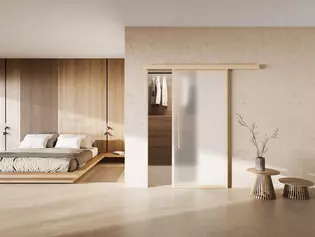
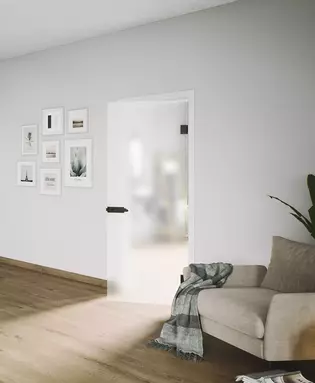
Glass revolving doors and Glass sliding doors for Feng Shui
You can achieve the last two Spots on the list with the use of Sliding doors made of glass and doors made of clear glass. Sliding doors can be fully opened even in places in the apartment, where a Hinged door might only open halfway because of a piece of furniture. If the piece of furniture is urgent and will not fit in any other place, a Sliding door is the ideal solution.
Glass doors made of clear glass can facilitate the flow of energy between different rooms by creating visual connections. Unlike solid doors or frosted glass doors that could block the flow of energy, clear glass doors create a seamless connection between rooms. This allows for even distribution of energy and prevents stagnation or blockages. According to the teachings of Feng Shui, this allows positive energy to enter the room and negative energy to flow out.
Another benefit of clear glass doors in Feng Shui is that they direct and maximize natural light. Glass doors allow light to spread unimpeded throughout multiple rooms. This not only increases visual brightness, but also positively affects the mood of the people in the room. According to Feng Shui teachings, the transparency of doors allows for the unimpeded movement of Qi and helps create an open, energetically balanced environment.
Clear glass doors can also support Feng Shui when arranging furniture: Because they visually enlarge the space or visually unify rooms (this is especially true of large, multi-leaf Sliding doors made of clear glass), we can create a conscious connection between the various elements in the room and place furniture specifically to support the flow of energy.
Consciously design entrance, doors & room flow
In Feng Shui, doors direct the flow of Qi - they should be able to open freely and fully without furniture, coat hooks or light switches blocking the way. Make sure they are guided smoothly: soft-close and floor guides on sliding doors ensure quiet, track-stable closing; side sealing profiles increase privacy in the bathroom or home office. Avoid "door-to-door" axes (e.g. entrance directly onto bedroom door) - a lateral offset or a semi-transparent glass door (satin/textured) breaks the line, guides light and keeps energy in the room. The entrance area is considered the "mouth of Qi": clear lines of sight, good lighting, a handy door handle at a comfortable height and tidy zones provide a friendly welcome and reduce stress on arrival.
Material, color & feel in balance (five-element impulse)
For harmony, combine materials according to the five elements: Wood (e.g. frames, warm veneer) stands for growth; fire can be set selectively using warm metal tones (brass/gold matt) or light accents; earth shows matt, sandy surfaces; metal is reflected in stainless steel/chrome or graphite black with clear contours; water flows over glass - clear for expanse, satin for calm. Choose soft matt handles (e.g. silky surfaces) for a warm feel, and prefer softly rounded shapes if sleeping or relaxation areas are connected. Consistency is important: Match the door leaf, fittings and adjacent surfaces in 2-3 recurring colors - this creates a calm overall look that remains consistent even with subsequent updates.
Fine-tune acoustics, odor & microclimate in door zones
Feng shui does not end at the door leaf - door zones shape the sound, air and mood of a room. Plan for quiet acoustics: textiles (runners, rugs), murals with soft surfaces and shelves near the door break up reverberation; rubber/felt pads under furniture reduce contact noise when opening. Gentle air movements without draughts ensure a balanced microclimate - avoid direct air flows in the axis of the door and direct them to the side (radiator screens, angled air vents).
Odor control has a subtle effect: a small diffuser or fresh branches to the side of (not in front of) the door create arrival rituals; odor barriers such as tight-fitting stops or inconspicuous sealing profiles help near the kitchen/bathroom. Pay attention to temperature zones: Doors between warm and cooler areas benefit from thermally decoupled floor transitionsand shadow-free lighting so that the threshold is not perceived as a "cold bridge". Finally, check whether the door sound (closing noise) is pleasant: an even, muffled sound promotes peace and quiet and prevents "energetic impacts" in adjacent rooms.
Rituals, order & nocturnal paths - the silent energy drivers
The strongest feng shui effect is created in everyday routines. Set up small rituals at main doors: a defined storage area (tray, hook strip, slim console) to the right or left of the opening direction prevents search stress and "energy loss" due to lying around.
Vertical organization keeps paths clear - high elements behind the door, low ones in the line of sight; this makes the entrance feel open but not empty. For night-time orientation, floor-level, glare-free light points guide the way between the bedroom and bathroom/kitchen - ideally with warm color temperatures and motion detectors to keep the body in rest mode.
Plan privacy screens instead of hard barriers: semi-transparent panels, plant islands or slim consoles indicate boundaries without stopping the flow. And think about exceptional situations: A tidy vanishing line (no boxes behind the door, cables secured) keeps paths energetically clear - and practically safe.
Finally, define a micro-routine set (1 minute in the morning/evening: tidy shoes, check light sources, wipe the handle and switch area) - these small gestures stabilize the desired room quality and make Feng Shui tangible in everyday life.
Doors as energetic buffer zones - conscious planning, conscious perception
In Feng Shui, doors are not only functional building elements, but also energetic transitions between zones with different uses and moods. Even the choice of door type can have a conscious influence on the flow of space and the perception of the occupants: For example, a sliding door with a frosted glass surface at transitions between active and passive areas (e.g. living room ↔ bedroom) can regulate the flow of qi without infringing on privacy. The satin surface diffuses the incoming light, creates a calm, soft atmosphere and at the same time prevents a hard, direct line of sight into particularly sensitive zones. At the same time, the semi-transparent surface signals inner space without making the room appear "open" in the classic sense. In Feng Shui, this is referred to as an energetic buffer that harmoniously interlocks light, movement patterns and perception instead of abruptly separating rooms from one another.
Likewise, deliberately selected frames and frame details can emphasize or defuse the energetic entry point of a door: A clear, gently rounded frame has a more inviting effect than a sharp edge - it opens up the transition without allowing the view or energy to "dart out" unchecked. When entering the house, such a carefully designed transition zone reinforces the feeling of calm and control from the very first moment, which is equated with a positive, open flow of Qi.
Details, choice of handles and material cosmos in Feng Shui - creating tangible qualities
While feng shui often focuses on major principles such as light, axes or room geometries, haptic and material-related details also play an underestimated role in energetic well-being. For example, the choice of door handles and fittings can specifically support room qualities that are important in the Feng Shui concept: Handles with a warm feel made of wood or soft matt surfaces convey a sense of security and calm, which has a positive effect on the flow of Qi in daily life. In turn, handles in clear, metallic tones can create structural clarity and thus promote concentration and efficiency, particularly in work or activity zones. Such deliberate material contrasts help to modulate the energetic rhythm, especially in zones that are to be deliberately structured, such as corridors or transitional spaces.
In addition, combined material concepts of wood, glass, metal or frosted glass influence the mood of a room in depth: wood as a carrier of the growth principle reinforces warmth and softness, while glass as a "flow medium" channels light and energy. Metal accents set clear lines and boundaries, which are regarded as organizing impulses in Feng Shui. The targeted combination of these materials - for example, a glass door with a warm wooden frame and matt handle surfaces - creates a harmonized energetic balance that not only allows the Qi to flow, but also creates tactile, psychological resonance spaces. In this way, feng shui does not become an abstract doctrine, but an everyday element that can be felt with every touch of the handle and door leaf.