
Window handles 2026: Sleek lines, matt surfaces and subtle colors - this is what the new standard looks like
Many modernizations start with the floor, walls and lighting. Window handles come at the very end. They are often not even touched. Yet they are one of the things you use every day. Several times.
A window handle is also located exactly where your gaze often lands. On the frame. Right next to the glass. If the handle doesn't match the rest, the whole area looks unbalanced. Even if the window and wall are perfect.

Brief overview: From a purely functional component to a design statement
In the past, a window handle was primarily intended to function. Today, it should also work. That is not a contradiction. It is an upgrade in everyday life.
Window areas are getting larger. Frames are becoming narrower. Interiors are being planned more calmly. In this environment, a handle stands out more than before. That's why its shape, color and surface automatically come into focus.
Providing orientation for upcoming renovations and new buildings
This article classifies the most important window handle trends for 2026. It shows what "slim" and "matt" mean in practice. And it helps you to make a decision that will remain coherent for a long time.
You don't get a trend catalog. You get a clear logic. So that your handles don't look "bought in" later on, but work together with the room.
What "lean lines" actually means
Straight vs. softly rounded shapes - where which look works well
Straight shapes have a clear effect. They go well with modern floor plans, smooth wall surfaces and straight-lined furniture. The handle then becomes the line that "draws" the window. This creates a calm and controlled effect.
Softly rounded shapes often feel more pleasant. They appear less austere. This goes well with rooms with wood, textiles and warm materials. The hand remains in the center.
Both work in 2026. The decisive factor is how the room speaks otherwise. If the room already has a lot of hard edges, a gentle curve often acts as a counterbalance. If the room is soft, a clear edge brings structure.
Slim handles in the context of large glass surfaces and narrow frames
Large glass surfaces change our perception. They draw light into the room. They show more outside space. And they intensify reflections. A slimline handle helps to avoid overloading the picture.
With floor-to-ceiling windows in particular, a massive handle quickly looks like a "foreign body". Slender lines keep the surface light. The view remains on the glass. The window looks like an opening, not like a component.
This is doubly true for narrow frames. Every detail counts. A handle that is too large can tilt the proportions. A slim handle stabilizes it.

Narrow rosettes, reduced proportions: technical and visual aspects
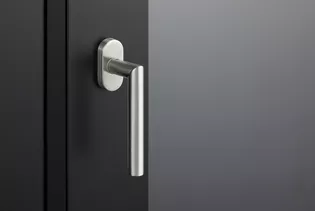
"Slim" does not automatically mean "thin". It means: deliberately reduced. A slim window handle works with clear proportions. It looks precise. And it keeps the window appearance calm.
Slim rosettes play a key role here. They do not take the stage away from the frame. At the same time, they look more modern because they take up less space. This goes well with today's window profiles, which are also often narrower.
Technically, a handle still needs substance. Screws, squares and mechanics must be stable. Good slenderness does not hide the technology. It integrates it neatly.

Matt surfaces as the new standard
Why matt? Fingerprints, care and light reflections in everyday life
Matt has a very practical reason. It shows less. Fingerprints recede. Small marks do not immediately appear to be a problem. This is a real advantage in everyday life.
Matt also controls light. Glossy surfaces reflect light at certain points. This can look elegant, but can also be distracting. Especially when the sun is low in the sky or with spotlights in the evening. Matt surfaces diffuse light more softly. This noticeably calms window zones.
And something else counts: matt has a constant effect. It looks more similar in the morning and evening than high gloss. This means that the handle remains stable throughout the day.
Matt black, cashmere gray, stainless steel look, warm metal tones
Matt black remains a classic. It has a graphic effect. It creates a clear outline without being loud. In bright rooms, it functions as a calm frame. In dark rooms, it blends in with the background and appears almost invisible.
Cashmere gray and similar shades of gray are in tune with the times. They appear softer than black. They are easier to combine with warm woods. And they go well with neutral wall colors, which continue to dominate in interiors.
Stainless steel looks also remain relevant. It looks functional and unagitated. This works particularly well in kitchens and rooms with technical elements. Warm metal tones such as matt brass or bronze have a homely feel. They add a subtle accent if the room is otherwise quiet.
Guidance is important. Don't choose "everything that is possible". Decide per room zone.
Matt in combination with other metal surfaces in the room
Window handles do not stand alone. Door handles, lights and fittings are in the same field of vision. And they are also touched. If the world of metal is mixed up, the room looks restless.
Matt helps here because it connects better. A matt black can work alongside brushed stainless steel. A cashmere grey finish often harmonizes with warm metals. Gloss, on the other hand, quickly competes. Metal then starts to "shout" in the room.
Therefore, plan one metal line per visual axis. It doesn't have to be identical. It should appear related. Then your room will look more upmarket without you having to change much.
Matching products


Ergonomics and haptics behind the trend
Slim but easy to grip: minimum sizes and shapes for convenient operation
Lean should never come at the expense of ease of use. A window handle is turned. Not pressed. This means that your fingers need a grip. And you need enough surface area to build up force cleanly.
A handle that is too thin quickly feels "nervous". It tends to slip. It forces the hand to exert more pressure. This is particularly noticeable in the cold season or when hands are damp. Good slim grips therefore remain controllable. They look light but feel stable.
The role of haptics: edges, curves and surface structure
Haptics arise from geometry and surface. Edges provide guidance. Curves provide comfort. A good solution balances both. You immediately feel the handle correctly. And you automatically grip in the right place.
Surface texture makes all the difference. A matt finish often feels drier. It gives more security. A high-gloss finish can appear more slippery. This is not a rule without exception. But the effect quickly becomes apparent in everyday life.
If you open windows often, this attention is worthwhile. The handle is then not just "pretty". It becomes pleasant.
Ergonomic aspects for children, older people and frequent users
Children grip differently. They grip at an angle. They sometimes use too much force. A grip with good radii forgives this. And it also feels safer for small hands.
For older people, leverage counts. A handle should be easy to move but still feel stable. Straight lines can be helpful here because the hand guidance remains clear. A good surface structure also reduces slipping.
Frequent users notice quality very quickly. This is just as true in everyday life as it is in the contract sector. If a handle is moved frequently every day, it must work evenly. Then the room remains calm. And your hand remains relaxed.


Technology in the background: safety and comfort
Burglar-resistant hardware that remains visually unobtrusive
Today, security does not have to be visible. Modern window technology integrates burglar-resistant components without the handle appearing bulky. This is important because window areas are becoming larger and first floor areas are often planned to be more open.
When renovating, make sure that security features match the usage. First floors, balconies and easily accessible windows deserve more protection. The handle can still look slim. The technology works in the background.
This keeps the design calm. And you gain security without compromising on appearance.
Additional functions: lockable handles, child safety lock & ventilation settings
Function will be quieter but more important in 2026. Lockable window handles offer protection, for example for first floor windows or in children's rooms. They prevent unintentional opening. And they give a clear sense of control.
Child safety locks help without complicating everyday life. A solution that remains logical is particularly worthwhile for windows that are frequently tilted. Ventilation positions in turn support comfort. They make controlled ventilation easier. And they help to stabilize the everyday indoor climate.
What is important here is that functions should not look like additional parts. They should fit into the handle logic.
Smart-ready? How modern handles can be combined with sensor technology and smart home solutions
Smart homes don't end with lighting and heating. Windows play a central role because they influence the indoor climate and security. Sensor technology can report open positions. They can support ventilation routines. And it can supplement alarm chains.
Window handles themselves often deliberately remain analog. This makes sense because operation should remain quick and direct. Smart-ready usually means combining the handle with discreet sensor technology on the window. This keeps the handle slim and quiet. The intelligence works in the frame or in the contact zone.
If you are planning this, make sure the system is compatible. And keep an eye on everyday life. Technology should help, not explain.
Practical examples and design approaches
Example 1: Modernization of an old apartment with slim, matt handles
Old building brings character. Stucco, high ceilings, floorboards. At the same time, many people want more calm in the details. Slim, matt window handles help to achieve this without "smoothing out" the old building.
Instead of glossy classics, matt surfaces look like a modern frame. They take reflections out of the window area. This is particularly important in old buildings because light often falls strongly into the room. A cashmere gray or brushed tone can look more elegant here than hard black. It remains visible, but has a milder effect.
The key lies in repetition. If window handles, door handles and perhaps light fittings form a related metal line, the apartment appears orderly. The old building remains an old building. It just looks clearer.

Example 2: New building with large window areas and restrained fittings
New buildings are often dominated by large glass surfaces. Frames are slim. Rooms are open. This is precisely where window handles need to be restrained so that the architecture is effective.
Slim lines fit perfectly. Matt surfaces prevent hard reflection points. Tone-on-tone solutions make the window area almost disappear. The view is to the outside. Inside, the area remains calm.
A uniform concept is particularly worthwhile in such houses. You often see the windows as a series. When every handle looks the same, rhythm is created. This gives the room a high-quality feel without it being recognized as a "design trick".
Example 3: One house - three color concepts for window handles depending on the room zone
A house often has zones. Public, private, functional. You can adapt window handles to these without having to mix and match. All you need is a clear logic.
In public areas such as living and dining, tone-on-tone looks very calm. The handle leans against the frame. In functional areas such as kitchens and utility rooms, a slightly darker, matt handle can be more suitable for everyday use. It remains stable in appearance. In private areas such as bedrooms or bathrooms, a warmer tone can work if it remains consistent. Matt brass can add warmth without creating shine.
This creates variation. But it remains controlled. The house does not look as if it has been "bought together", but as if it has been planned.
How to find the right window handle
Decision check: style, surface, color, function
Start with the line. Should the handle be visible or recede? Once you have this clear, the finish follows. Matt is the standard because it balances everyday life and light well.
Then comes the color. Tone-on-tone is calming. Gentle contrast creates orientation. Strong contrast creates graphics, but it should remain deliberate. Finally, check the function. Do you need lockability? Do you need child safety locks? Plan the rooms so that technology helps you instead of imposing additional steps on you.
If you follow this sequence, you will make better decisions. And you will avoid having to "make corrections" later.
Common mistakes and how to avoid them
The most common mistake is to make a decision based only on a photo. The handle looks different in the catalog than in the backlight at the window. Gloss in particular can quickly become too dominant there. Therefore, always test in real light.
A second mistake is an uncontrolled mix of metals. If door handles are warm, window handles are cold and lights are shiny in between, the room looks nervous. Decide on one metal line per visual axis. And stick to it.
A third mistake concerns the feel. Slim should not mean "mini". Grip the handle. Turn it. If it feels unsafe, it will bother you every day.
Grasp patterns, check door handles, observe light
Take patterns seriously. Grasp the handle in everyday life. Check it in the morning, at midday and in the evening. Window light changes surfaces more than any other light in the house.
Place the handle next to your door handle or next to a fitting. Not because everything has to be the same, but because it should look related. Pay attention to the gloss level and tone. The eye reads these details faster than you think.
If you check like this, you will make a safer decision. And you will create a handle concept that will remain consistent for a long time.
Let us inspire you


The three core trends summarized in one sentence
In 2026, window handles stand for slender proportions, matt surfaces and subtle colors that blend into the room instead of dominating it.
Window handles are small components with a big impact. They repeat themselves. They are in view. They are constantly touched. If you plan them consistently, they create a calm rhythm throughout your home.
A uniform handle concept does not look like a design decision. It looks like quality. And that is precisely the new standard: less effect, more harmonious precision.