
The door hinge multiplication table
Door hinges are small, inconspicuous and hardly noticed - yet they play an important role in the correct opening and closing of doors. What exactly door hinges are, how they work and what types there are: We explain here.
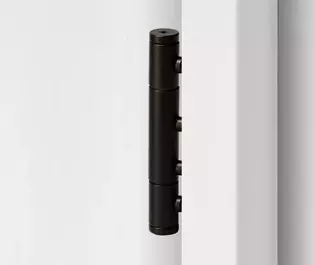
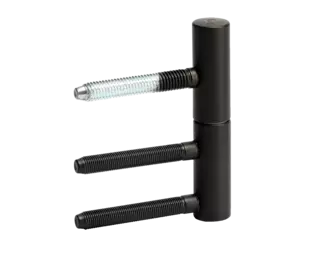
What are door hinges?
On the one hand, they connect the door to the frame. On the other hand, they help to move the door smoothly.
Door hinges are usually quite small and are mostly made of steel. They carry many times their own weight - namely the door leaves. Door hinges are used for wooden, steel, glass and plastic doors.
Door hinges


How do door hinges work?
Door hinges serve as a link between the door and the frame. They are responsible for ensuring that the door remains movable and functional for a long time. Door hinges are the linchpin of every door. Two door hinges are used per door as standard.
They basically consist of two elements, but can also consist of more than two parts:
- Upper hinge part: The upper hinge part is attached to the door leaf. There it is drilled, milled and finally screwed in place.
- Hinge bottom part: The hinge bottom part is mounted on the frame, i.e. it is drilled, milled and screwed in. If the hinge is a hinge pocket element, the hinge bottom part is screwed into the frame together with the hinge pocket.
How do door hinges differ from hinges?
Colloquially, the door hinge is also called a door hinge. However, door hinges consist of several individual parts, whereas one speaks of a hinge when it consists of only one part - i.e. it cannot be disassembled.
Door hinges are usually made of two or three parts and are assembled together. In contrast to a hinge, a door with hinges can be unhinged without having to dismantle the hinges first.
Different types of door hinges
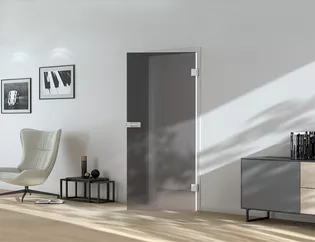
Door hinges must meet different requirements depending on the door's area of application. In general, however, they must be robust, as they bear the full weight of the door every day.
For passageways with high public traffic, the door hinges must meet certain safety requirements. In highly frequented public buildings, e.g. hospitals or leisure facilities, special fire and smoke protection door hinges are therefore used.
In private homes, on the other hand, doors made of glass, wood or plastic are usually used. Door hinges made of aluminium, die-cast, stainless steel or steel can be used here. The right door hinge should also be matched to the frame.
The following types of door hinges are distinguished:
- 2-part hinges
- 3-part hinges
- Tectus hinges
- Roller hinges
- 3D hinges
- Attachment hinges
2-piece door hinges
This type is found as standard in many interior doors.
The hinge consists of two parts: Upper hinge part and lower hinge part. The former is screwed to the door with only one thread. The bottom part of the hinge, on the other hand, is attached to the frame with two screw threads.
3-part door hinges
For more heavily used doors, e.g. for children's rooms, 3-part hinges are worthwhile. Oversized doors, doors made of heavy real wood and house entrance doors also need 3-part door hinges. This variant consists of three parts, whereby the upper and lower parts are each screwed to the door with a thread. The middle part has two screw threads and is mounted on the frame. The parts are connected to each other by a pin. With the help of this device, doors can be easily inserted.
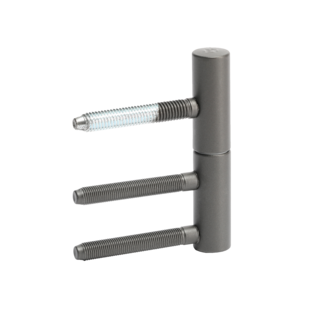
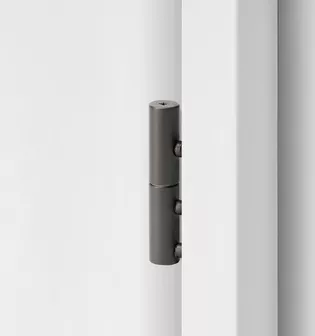
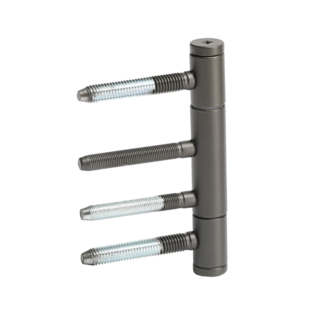
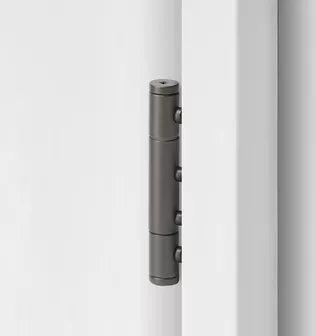
By the way: The holes on the frame for the screw thread are in the same place for 2-piece and 3-piece hinges. This means you can easily change a door from 2- to 3-part hinges and vice versa - without having to replace the entire frame.
Tectus hinges
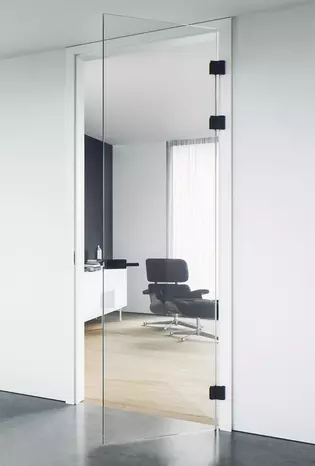
So-called Tectus hinges are used when it comes to butt-hinged doors or doors with a butt look.
Roller belts
Roller hinges are almost concealed and invisible and score points with their elegant appearance. When the door is closed, only the castors are visible. This makes roller hinges look particularly modern and robust at the same time. These hinges are therefore also suitable for heavy doors, e.g. house and flat entrance doors. At the same time, they provide increased protection against burglary and are easy to install.
3D hinges
3-hinge or three-dimensionally adjustable hinges are very well adjustable door hinges. With the help of the small screws, the door leaf can be precisely adjusted in terms of height, side and pressure. This enables infinitely variable adjustment - without the door leaf having to be lifted out.
3D hinges are used particularly frequently in entrance doors, as they ensure optimum closure of the door. Further advantages: They contribute to sound insulation, thermal insulation and burglary protection, among other things.
Attachment hinges
A distinction is also made between top hinges. Whether made of aluminium or plastic - they are particularly suitable for front doors. They are available in 2-part and 3-part versions. They can be flexibly adjusted and are screwed into place. Although top hinges require less maintenance, the adjustment of the sash should be checked regularly so that the hinges are not subjected to unnecessary stress.
Door hinges: What is a hinge pocket?
If the hinge bottom part is not fixed directly in the frame, the hinge pocket comes to the rescue and holds the hinge bottom part including its two screw threads. This is often the case, for example, with block frames or steel frames. The bottom part of the hinge is then fastened with a clamping shoe and clamping screws and screwed into the frame as a unit with the hinge pocket. For this reason, a door with a hinge pocket is also referred to as "reinforced hinges".
Where can I buy door hinges?
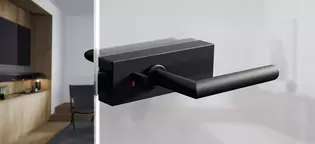
At GRIFFWERK you will find a wide range of accessories for doors and windows. Whether glass door or wooden door - we also have the matching door hinges. The right glass door fitting is particularly important for all-glass doors. Convince yourself of the GRIFFWERK quality with the PURISTO S glass hinged door fitting set with the matching glass door fitting and glass door hinge - available in matt stainless steel, cashmere grey and graphite black. You will also find matching door handles in the GRIFFWERK range. Our products are available from specialist dealers and selected online shops!
The most frequently asked questions about door hinges
What questions are most often asked about door hinges? We found out using software that analyses which questions people ask voice assistants from Apple, Google and the like. We answer four of them here:
What are door hinges and what are they used for?
Door hinges are metal fittings used to hang doors. They usually consist of two parts: a hinge attached to the door and a hinge plate attached to the door frame or jamb. Door hinges allow doors to open and close smoothly and contribute to the stability and security of the door.
How do I choose the right door hinges for my door?
The selection of the right door hinges depends on various factors. These include the weight and size of the door leaf, the desired style, the door leaf thickness and the installation location. It is important to ensure that the door hinges can support the weight of the door leaf and provide sufficient stability. If unsure, it is advisable to consult a professional who can help select the appropriate door hinges.
How do I install door hinges?
The exact installation method may vary depending on the type of door hinges, but generally the installation is done in the following steps:
- Determine the position of the door hinges on the door and on the door frame.
- Mark the drill holes for the fixing screws.
- Drill the holes according to the markings.
- Fix the hinge plate to the door frame and the hinge to the door.
- Check the alignment and functionality of the door and make adjustments if necessary.
It is recommended that you read the manufacturer's installation instructions and seek professional assistance if necessary to ensure that the door hinges are installed correctly.
How do I care for and maintain door hinges?
To keep door hinges in good condition and prolong their life, it is advisable to maintain them regularly:
- Regularly check the fastening screws and tighten them if necessary.
- Lubricate the joints of the door hinges with suitable lubricant to ensure smooth opening and closing.
- Clean the door hinges regularly to remove dirt and debris.
- Check for signs of wear or damage and replace defective door hinges if necessary.
By following these care and maintenance tips, you can ensure that your door hinges function optimally and last longer.