
All about Door handles
They can significantly change the look and style of the interior: Door handles. What types there are and what material they are made of - an overview.
What are Door handles?
To be able to open and close doors, every door needs a suitable handle. Door handles come in a wide variety of designs and materials. In addition to the right look, there are other aspects that need to be considered before buying. Corrosion resistance, quality, workmanship, and the corresponding DIN standard determine the life of the Door handle.
What are the types of Door handles?
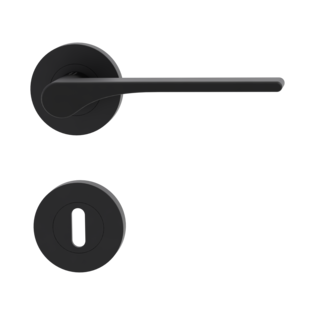
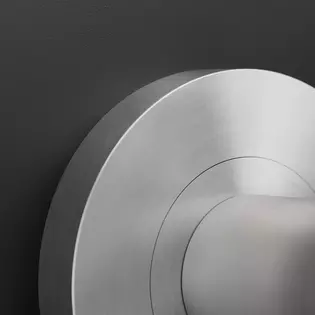
Rosette Door handles
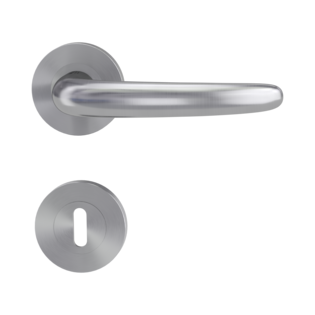
Door handles with rosettes consist of two parts: the door handle and the cover or border of the door lock, which is called a rosette. They are available in straight-edged or round design.
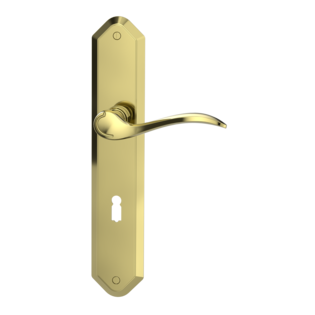
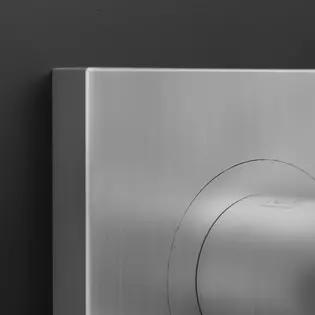
Backplate Door handles
Backplate Door handles consist of one part. That is, the Door handle and the keyhole are connected by the Backplate. Backplate Door handles are available in short or long version.
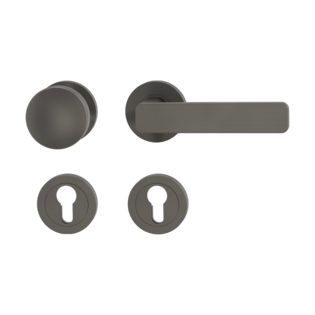
Change Door handle set
This type of Door handle set consists of two different door handles. On one side, usually inside, a classic Door handle is mounted for pressing. On the outside, there is an immovable doorknob. An alternation of Door handle types - hence the name.
Door handle half set
The solution for doors that connect two rooms with different interior style. Doors with Half set door handles can have completely different door handle designs on the inside and outside. Playful country style on one side and modern designer furnishings on the other side can thus be wonderfully rounded off with the matching design of the Door handles.
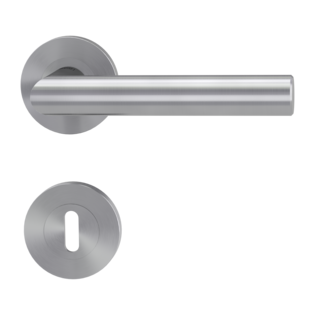
Ulmer door handles
A special door handle design: The Ulmer Türklinke is a mathematically designed door handle made of diminishing ellipses. The Ulm handle has no bend in its lines: it is shaped into an arc. It was designed in the 1950s by the former Bauhaus student Max Bill. Together with the student Ernst Moeckel, he developed the door handle in question.
What materials are door handles made of?
Iron, brass, stainless steel or aluminium - door handles are made of a wide variety of materials. An inexpensive, but somewhat less durable variant: plastic door handles.
Stainless steel door handles
Stainless steel door handles are particularly stable and resistant thanks to their nickel-steel alloy. The smoother the surface of the stainless steel door handles, the more corrosion-resistant they are. Important: Regular repolishing with stainless steel cleaner.
Aluminium door handles
Matt or glossy: door handles made of aluminium are equally corrosion-resistant due to the anodised protective layer and are therefore robust and easy to clean.
Brass door handles
Brass door handles are more susceptible to corrosion than handles made of other metals without proper care. To prevent darkening: Regularly polish the door handles with special brass cleaners.
Plastic door handles
Cost-effective door handles in all colours: Plastic door handles are usually made of polyamide, which can be produced in a wide range of colours. They are easy to clean and do not become statically charged. Disadvantage: UV rays can make them porous, fade and make them less durable.
The standard for door handles: DIN EN 1906
The DIN standard EN 1906 gives indications in different categories of how durable, burglar-proof, fire-resistant and corrosion-resistant door handles are: From categories of 1 (very low) to 5 (very high), they indicate how pronounced the various properties of the respective door handles turn out to be.
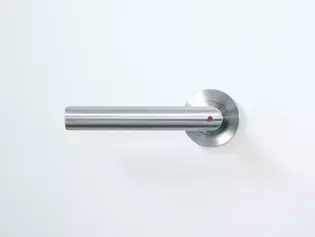
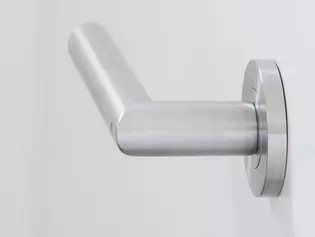
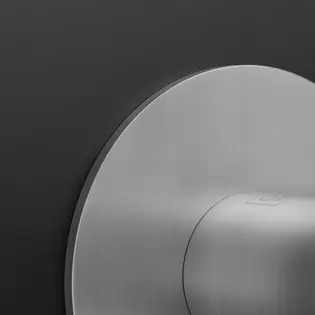

Selection Griffwerk Door handles


Frequently asked questions and answers about door handles
We have answered the most frequently asked questions about door handles for you:
What is the difference between a door handle and a door knob?
Answer: A door handle is a lever handle that opens the door lock by pushing it down, whereas a door knob is round and usually has to be turned to open the door.
What materials are door handles made from?
Answer: Door handles can be made of various materials such as stainless steel, brass, aluminum, plastic or wood. Stainless steel and brass are particularly popular due to their durability and aesthetics.
How do I fit a door handle myself?
Answer: To fit a door handle, you will need a screwdriver, screws and possibly a drill. The handle is attached to the door by screwing the parts together on both sides of the door. Detailed instructions are usually included with the door handle.
What types of door locks can be combined with door handles?
Answer: Door handles can be combined with various door locks, including cam locks for interior doors, profile cylinder locks for front doors and toilet locks for bathrooms.
What can I do if my door handle is jammed or wobbly?
Answer: If the door handle is jammed, it can help to oil the lock. If the door handle wobbles, you should tighten the screws. If the problem is more serious, it may be necessary to dismantle the door handle and check or replace the mechanism.
Are there special door handles for barrier-free living?
Answer: Yes, there are specially designed door handles for barrier-free living. These are usually longer and ergonomically shaped so that they can be easily operated by people with limited hand mobility.
How can I increase the security of my door handle?
Answer: Security can be increased by installing security locks, locking cylinders and protective fittings. In addition, an electronic access system can be installed that only allows authorized persons to open the door.